
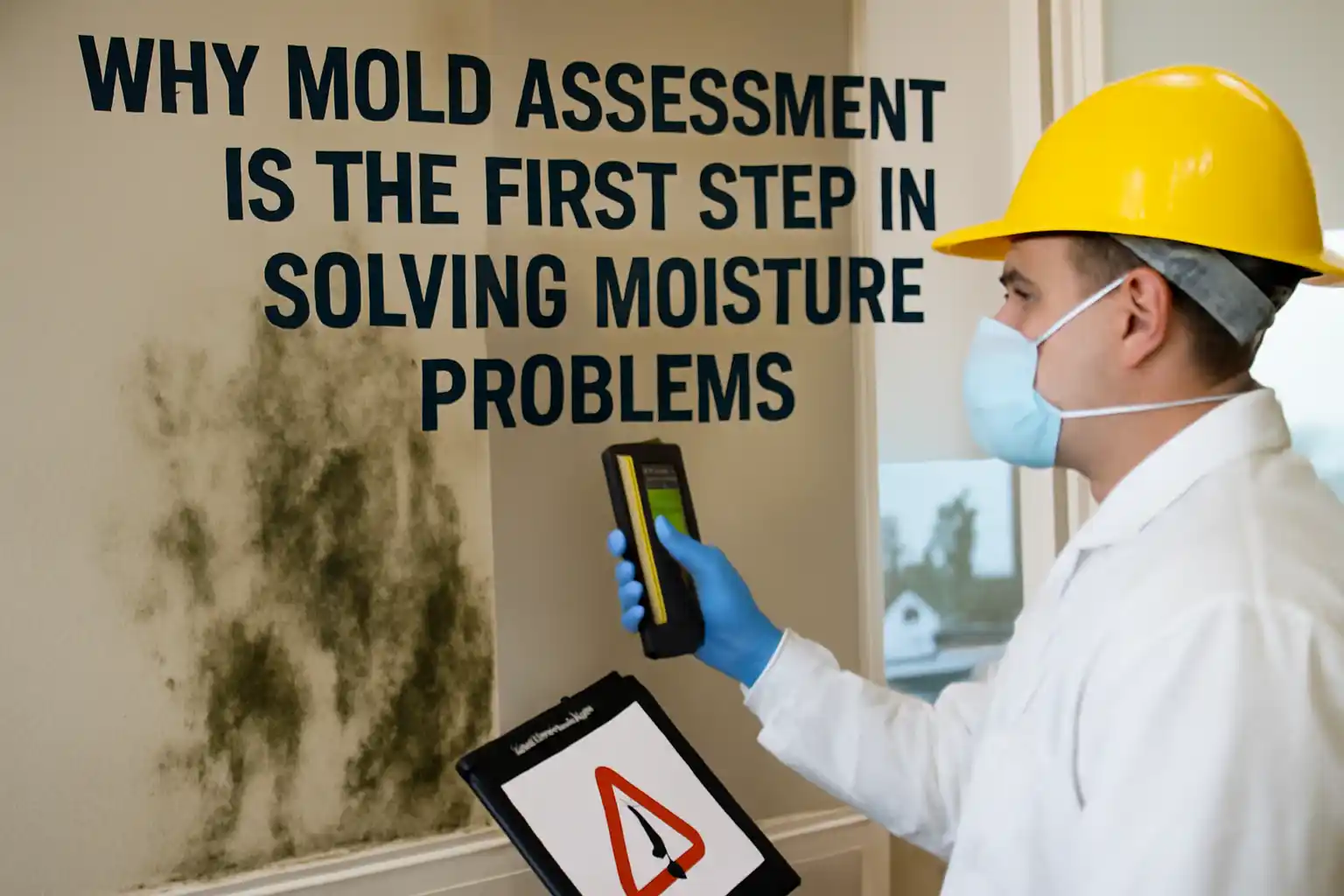
Homeowners in Seabrook often notice damp walls, musty odors, or foggy windows and assume it’s a minor issue. However, those early signs can indicate underlying moisture problems that lead to hidden mold growth. Right mold assessment in Seabrook is not just about spotting visible mold; it’s a systematic process to uncover concealed contamination and its root causes. Without understanding the full extent of the moisture intrusion, even professional cleaning may only provide temporary relief.
A proper mold assessment helps homeowners identify the source of excess humidity, track how deeply mold has spread, and take preventive action before damage worsens. By partnering with a certified inspector, Seabrook residents can protect their home’s structure, maintain healthy indoor air quality, and avoid expensive future remediation.
This article explains why mold assessment should always be the first step in solving moisture problems, how professionals perform it, and why early testing safeguards both your property and family health.
What Is a Professional Mold Assessment in Seabrook?
A professional mold assessment in Seabrook involves a detailed inspection to locate visible and hidden mold, identify water intrusion sources, and analyze air samples for contamination. Certified inspectors use advanced technology to measure humidity, temperature differences, and surface moisture levels.
GCR Builders LLC, a trusted local mold removal company, uses specialized equipment to ensure accurate mold detection and long-term solutions for homeowners.
During the assessment, experts check attics, basements, crawl spaces, and HVAC systems — all common areas where moisture accumulates. They then create a comprehensive report outlining mold presence, probable causes, and recommendations for remediation and prevention.
How Does Mold Assessment Identify Moisture Problems Early?
Moisture problems can develop quietly inside walls, beneath flooring, or behind wallpaper. Early detection during a mold assessment helps prevent structural deterioration and health risks. Professionals rely on these diagnostic tools:
- Hygrometers: Measure humidity levels in different rooms.
- Thermal imaging cameras: Reveal hidden leaks or damp insulation.
- Moisture meters: Determine the exact moisture content in building materials.
- Air sampling tests: Identify airborne mold spores invisible to the eye.
By mapping out moisture-affected areas, inspectors pinpoint where repairs are needed, helping homeowners act before mold spreads further.
Regular home moisture inspection in Seabrook can prevent future mold outbreaks. Schedule checks after heavy rains, plumbing leaks, or humidity spikes to keep your home safe year-round.
Step-by-Step Overview of the Mold Assessment Process
Here’s how a standard mold assessment unfolds in Seabrook homes:
- Initial Consultation: Homeowners describe symptoms like musty smells or wall discoloration.
- Visual Inspection: Certified inspectors visually examine all accessible areas.
- Moisture Mapping: Tools detect hidden damp zones inside walls or floors.
- Sampling and Testing: Air and surface samples confirm contamination levels.
- Lab Analysis: Samples are analyzed to determine mold species and spore concentration.
- Report and Recommendations: A detailed plan outlines remediation steps and moisture control strategies.
This process ensures no hidden colonies are missed and every moisture source is correctly identified.
Why Mold Assessment Comes Before Remediation
Attempting mold cleanup without assessment is like treating symptoms without diagnosing the illness. Mold thrives where moisture persists, and unless the root cause is found, it will keep returning.
A mold assessment Seabrook reveals whether mold is active or dormant, determines how far it has spread, and distinguishes harmless surface stains from harmful contamination. This knowledge helps professionals design targeted remediation strategies rather than generic cleanups.
Real Case Example
A Seabrook homeowner reported recurring wall stains despite repeated cleaning. A professional mold assessment uncovered a hidden pipe leak behind the bathroom tiles. Moisture mapping confirmed saturation within wall cavities. After repairing the leak and drying the structure, no mold reappeared, saving the homeowner from repeated remediation costs.
Key Terms You Should Know
- Mold spores: Microscopic reproductive particles that spread mold growth indoors.
- Humidity control: Regulation of indoor moisture levels to prevent condensation.
- Moisture mapping: The process of identifying and documenting damp areas using digital tools.
Understanding these terms helps homeowners communicate effectively with certified inspectors.
Expert Tips for Preventing Mold and Moisture Buildup
- Keep indoor humidity below 50% using dehumidifiers or air conditioners.
- Insulate walls, windows, and pipes to reduce condensation.
- Ensure proper ventilation in bathrooms, kitchens, and laundry rooms.
- Repair roof and plumbing leaks immediately.
- Clean and maintain gutters regularly to divert rainwater away from foundations.
These steps maintain a healthy indoor environment and reduce future mold risks.
FAQs About Mold Assessment in Seabrook
1. Why is mold assessment essential before starting remediation?
A mold assessment Seabrook helps determine the full scope of contamination and identify hidden moisture sources. Without assessment, remediation may miss problem areas, leading to recurring mold.
2. How do professionals perform mold detection in Seabrook homes?
Inspectors use tools like moisture meters, hygrometers, and infrared cameras to locate hidden dampness. These devices help identify mold growth behind walls or under floors.
3. Can I perform a home moisture inspection myself?
While basic checks are possible, only certified inspectors provide accurate results. Professional mold testing services Seabrook ensure no hidden mold or air quality issue goes unnoticed.
4. How does mold assessment improve indoor air quality?
By identifying and removing hidden mold, assessments reduce airborne spores that trigger allergies, improving overall indoor air quality in Seabrook homes.
5. How often should I schedule a mold assessment?
Experts recommend annual inspections or after water damage, leaks, or flooding. Regular assessments prevent moisture issues from escalating into structural damage.
Conclusion
Mold assessment is the foundation for solving moisture problems in Seabrook homes. It not only identifies visible and hidden mold but also exposes the underlying humidity or leaks that sustain growth. Early professional inspection prevents costly remediation, preserves property value, and ensures healthy air for your family.
By choosing certified mold inspectors and acting proactively, Seabrook homeowners can stop mold before it starts, creating a safer, cleaner, and more comfortable living environment.