Remodeling a kitchen is one of the most exciting home improvement projects, but it can also be overwhelming if you don’t know where to start. Many homeowners rush into the process without a plan, only to find themselves redoing tasks, wasting money, or dealing with delays. If you’ve been asking yourself “what order should you remodel a kitchen in?”, you’re not alone.
The order of kitchen remodel refers to the sequence of steps you follow to complete the renovation smoothly, from demolition all the way to finishing touches. A proper kitchen remodel order of steps not only saves time but also reduces costs and stress.
In this article, we’ll break down the essential kitchen remodel order of operations, explain why the sequence matters, and provide pro tips for managing your project like a contractor. Whether you’re doing a DIY kitchen remodel or hiring professionals, this step-by-step guide will help you plan effectively and avoid costly mistakes.
In what order should you remodel a kitchen?
When starting a remodel, many homeowners wonder what comes first: tearing out the old cabinets, installing flooring, or choosing appliances. The truth is, following the right order of kitchen remodel steps is crucial for efficiency and long-term results.
Need expert help to manage your project from start to finish? Trust GCR Builders LLC for professional results done right the first time.
Step 1: Planning and Design
Every successful remodel begins with a clear plan. This stage involves:
- Setting your budget
- Measuring your kitchen layout
- Deciding on the style and materials
- Consulting with designers or contractors
- Creating a timeline
Tip: Think ahead about appliance sizes, cabinet placements, and plumbing locations. A detailed plan prevents mid-project surprises.
Step 2: Demolition
Once your plan is finalized, demolition begins. This includes removing old cabinets, flooring, countertops, appliances, and sometimes even walls if you’re opening up the space.
Safety first: Always turn off water, gas, and electricity before tearing anything down. A structured demolition ensures you don’t damage plumbing or electrical systems you’ll reuse.
Step 3: Plumbing, Electrical, and Mechanical Work
After the space is cleared, it’s time for the “behind-the-walls” work. This stage includes:
- Roughing in new plumbing lines for sinks, dishwashers, and refrigerators.
- Running electrical wiring for outlets, lighting, and appliances.
- Adjusting HVAC if ventilation or ductwork needs changes.
Pro Insight: Getting permits and inspections at this stage avoids costly rework later.
Step 4: Walls, Drywall, and Paint
Once utilities are in place, walls can be repaired or rebuilt. Drywall is installed, seams are taped, and the space is painted.
Painting at this stage makes sense because the room is still empty, reducing the risk of paint splatters on new cabinets or floors.
Step 5: Flooring Installation
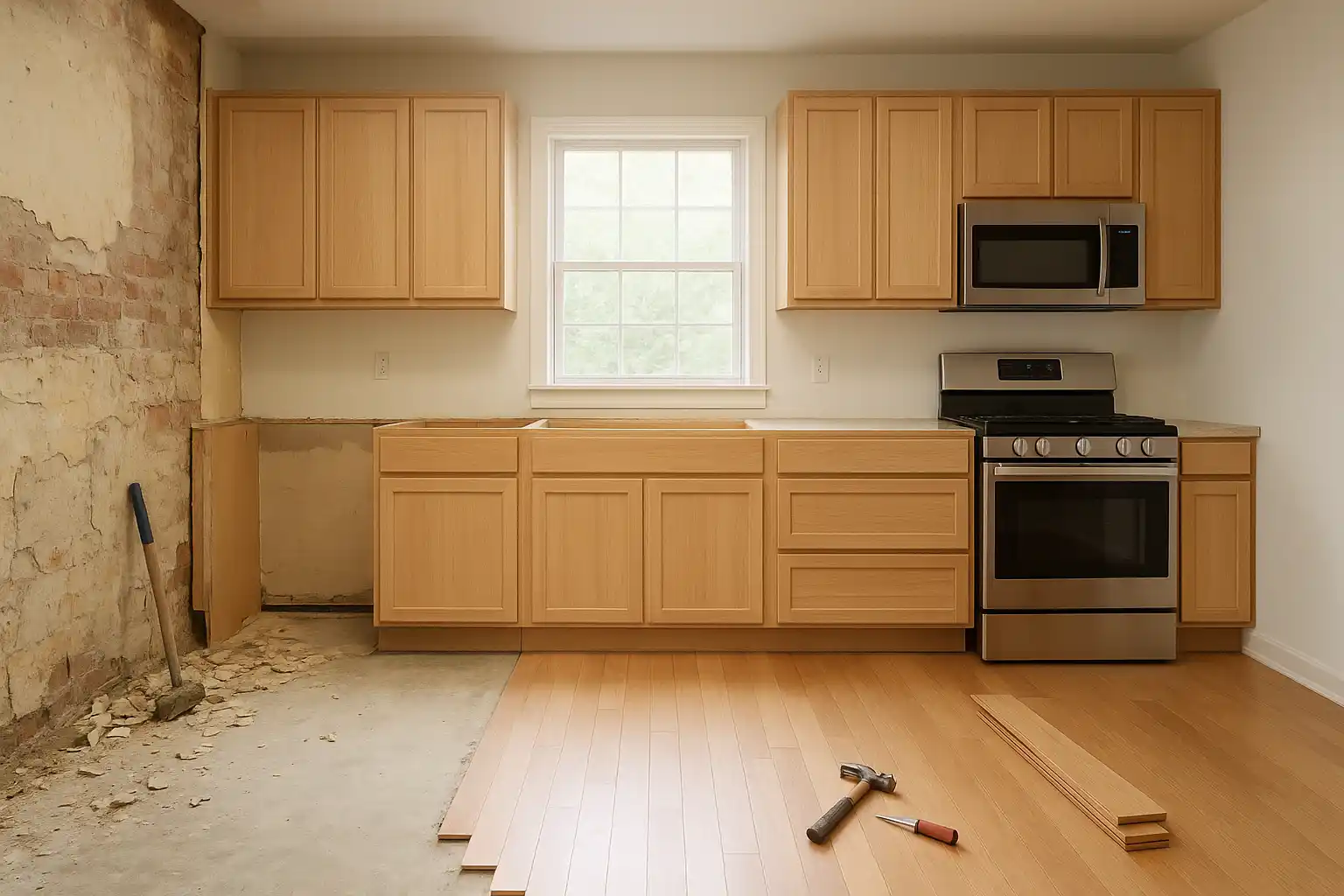
Flooring goes in before cabinets so it runs wall-to-wall and looks seamless. Whether you choose tile, hardwood, or vinyl, installing it now ensures clean lines and fewer cuts.
Case Example: A homeowner who installed cabinets before flooring later struggled with uneven cabinet bases. Doing floors first avoids this common pitfall.
Step 6: Cabinetry and Fixtures
Cabinets are installed after the flooring is done. This step includes base cabinets, upper cabinets, and large built-ins like pantry units.
Tip: Install heavy items like cabinets before adding countertops to prevent alignment issues.
Step 7: Countertops
With cabinets in place, it’s time to measure and install countertops. Materials like quartz, granite, or butcher block require precise fitting.
Countertop installation often takes a week or two due to fabrication time, so plan for a temporary kitchen setup during this phase.
Step 8: Backsplash and Finishes
The backsplash ties the kitchen design together and protects walls from splashes. This step also includes trim, molding, and other finishing touches.
Style Note: Subway tiles remain popular, but bold patterned backsplashes are trending in modern remodels.
Step 9: Appliances and Hardware
Finally, appliances are installed and connected. Hardware such as handles, pulls, and light fixtures go in at this stage as well.
Step 10: Final Inspection and Cleanup
The last step involves a thorough inspection. Check plumbing, electrical, and finishes. Small adjustments like tightening cabinet doors or sealing countertops, ensure your remodel is complete and ready for use.
FAQs about Kitchen Remodel Order
What is the best order to remodel a kitchen?
The best order follows: planning → demolition → plumbing/electrical → drywall/paint → flooring → cabinets → countertops → backsplash → appliances → final touches.
In what order do you remodel a kitchen if doing DIY?
If doing it yourself, follow the same sequence but double-check building codes. Skipping steps or working out of order can create costly mistakes.
Should flooring or cabinets be installed first?
Flooring should be installed first. This ensures a seamless look and avoids future issues with uneven cabinet placement.
How long does a full kitchen remodel take?
A complete remodel typically takes 6–12 weeks depending on scope, contractor availability, and material lead times.
Can I use my kitchen during the remodel?
During demolition and construction, your kitchen may be unusable. Setting up a temporary kitchen space helps you manage daily cooking needs.
Conclusion
Remodeling your kitchen is a big investment, but following the correct order of kitchen remodel steps makes the process smoother and more cost-efficient. From planning and demolition to final installation, sticking to the right sequence ensures everything fits together perfectly.