
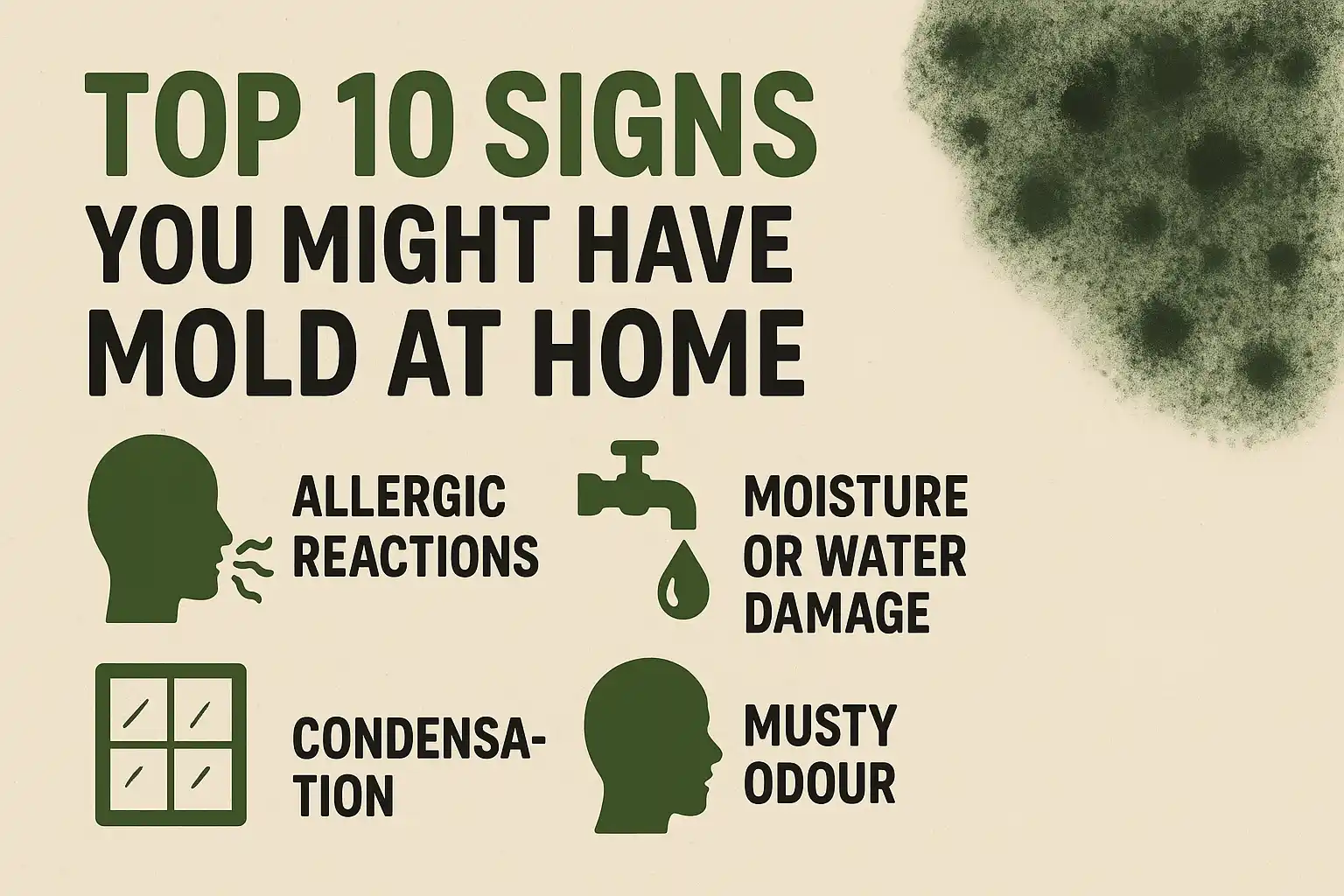
If your home smells earthy after you return from work, if your allergies flare indoors but calm down outside, or if tiny dots keep reappearing on paint even after you clean, you might be dealing with mold. Mold grows where moisture lingers, and it can spread quietly behind walls, under floors, and inside HVAC systems. Homeowners often miss the early clues because they seem small, like a faint odor or a few freckles on grout. That is why spotting problems early saves money and keeps indoor air healthier.
In plain terms, the signs of mold in your home are the visual, smell, health, and moisture clues that indicate mold is present even when you cannot see it.
This guide explains the ten clearest red flags, how to detect mold indoors step by step, and answers to common questions so you can act before a small patch becomes a big repair.
What are the top early warning signs of indoor mold?
Small problems give the best clues. Watch for odors, spots, moisture, and symptoms that only happen at home. Use the list below to check each room and note anything that repeats.
Need a pro to confirm fast? Book a same-week mold check with GCR Builders Official for a certified inspection and clear next steps.
1. Do you notice a persistent musty odor in your home?
A damp, earthy smell is the most common early signal. It often concentrates in closets, basements, crawl spaces, and bathrooms. If the scent fades with open windows then returns when the house is closed, suspect hidden growth.
2. Are there recurring mold spots on walls or ceilings?
Specks that look like pepper flakes or coffee grounds may appear on drywall, paint, or ceiling tiles. They often come back after wiping if moisture is still present. Look closely where exterior walls meet ceilings.
3. Do you see water stains or recent water damage?
Brown or yellow rings on ceilings and wallboard point to roof or plumbing leaks. Even if the surface is dry now, past moisture can feed hidden colonies inside the cavity.
4. Is paint or drywall bubbling, cracking, or peeling?
Swollen trim, soft drywall, or blistered paint means moisture is trapped. Mold thrives in those damp layers. Press gently with a finger; a spongy feel is a warning.
5. Are there black mold warning signs in grout and caulk?
Dark streaks on shower grout, window tracks, or silicone seals show constant humidity. If the area feels slimy or stains return quickly, ventilation and deep cleaning are needed.
6. Do household members have mold health symptoms at home only?
Runny nose, itchy eyes, cough, or headaches that improve when away from the house are common mold related health issues. Track symptoms by room and time to spot patterns.
7. Is there condensation on windows or cold surfaces?
Fog on glass, wet sills, and damp corners signal high indoor humidity. Condensation feeds early signs of mold growth, especially behind furniture that blocks airflow.
8. Does your HVAC smell earthy or blow dust that clumps?
A musty blast when the system starts, dark dust around vents, or a clogged filter can mean spores in ducts or near the air handler. Check drip pans for standing water.
9. Do carpets or rugs feel damp or give off a sour smell?
Under-pad moisture from spills or slab seepage can support growth you cannot see. Lift corners to check for discoloration or white fuzz on the backing.
10. Are storage boxes or wood items warping or speckled?
Cardboard, books, and raw wood absorb moisture. Look for warped lids, fuzzy growth, or stuck pages in basements, attics, and garages.
Key definitions at a glance
- Mold: a group of fungi that grows on damp materials and releases spores.
- Moisture intrusion: unwanted water entry from leaks, flooding, or vapor.
- Hidden mold: growth inside walls, under floors, or in HVAC where you cannot see it.
- Musty odor: earthy smell caused by microbial gases in damp areas.
How do you detect hidden mold indoors step by step?
- Map the clues
List rooms with smells, stains, or symptoms. Note time of day, weather, and HVAC use. - Check moisture first
Use a simple moisture meter on suspect walls and baseboards. Readings above normal for your material indicate a problem. - Inspect high-risk zones
Look under sinks, behind toilets, around tubs, below windows, near water heaters, and beneath appliances. Open access panels if safe. - Control humidity
Aim for indoor relative humidity around 40 to 50 percent. Run bath fans 20 minutes after showers and use a dehumidifier in damp spaces. - Clean small visible areas safely
Wear gloves and a mask. For non-porous surfaces, wipe with detergent and water, then dry. If stains return or the area is larger than a few square feet, call a professional. - Address the source
Fix leaks, improve ventilation, and insulate cold spots to stop condensation. No fix means the problem returns.
Quick look: visible vs invisible clues
| What you see or feel | What it suggests |
| Musty odor after rain | Moisture in walls or crawl space |
| Yellow ceiling ring | Past or current roof leak |
| Condensation on windows | High indoor humidity |
| Bubbling paint on exterior wall | Damp insulation or flashing issue |
| Dusty, earthy HVAC start-up | Contamination in ducts or coil pan |
Pro tip: Use painter’s tape to mark a stain edge and date it. If the stain grows past the tape, there is active moisture.
Case example: A condo bathroom kept showing black dots on the ceiling. The exhaust fan was weak and the shower door leaked. Replacing the fan, resealing the door, and repainting with a mold-resistant coating stopped the stains.
FAQ: how to know if you have mold
How can I tell if spots are dirt or mold?
Dirt wipes off easily and does not return quickly. Mold often smears, releases a musty odor, and reappears if moisture remains.
What are common household mold signs that point to hidden growth?
Musty odor, recurring wall stains, peeling paint, and high humidity are common clues. Water damage and mold often show up together around bathrooms and windows.
Are black spots always dangerous black mold?
Not always. Many species look dark. The risk depends on size, location, and your health. Treat any growing patch with care and fix the moisture source.
What mold symptoms in house should make me act fast?
Worsening cough, wheeze, or headaches that improve outside the home call for quick action. Start with moisture control and a focused inspection.
How to detect mold indoors without test kits?
Use your senses, track humidity, and inspect moisture-prone areas. If clues stack up, a professional inspection is the best next step.
Can cleaning alone solve moisture and mold problems?
Cleaning removes surface growth, but the source must be fixed. Leaks, poor ventilation, or condensation will bring the problem back.
Conclusion
Mold thrives where water and time meet. The most reliable clues are a musty odor, stains or spots that return, soft or bubbling surfaces, and health symptoms that flare indoors. Start with a careful room-by-room check, control humidity, and fix leaks quickly. Clean small areas safely, but bring in a qualified pro for larger, hidden, or recurring problems. Early action protects your home and helps everyone breathe easier.