
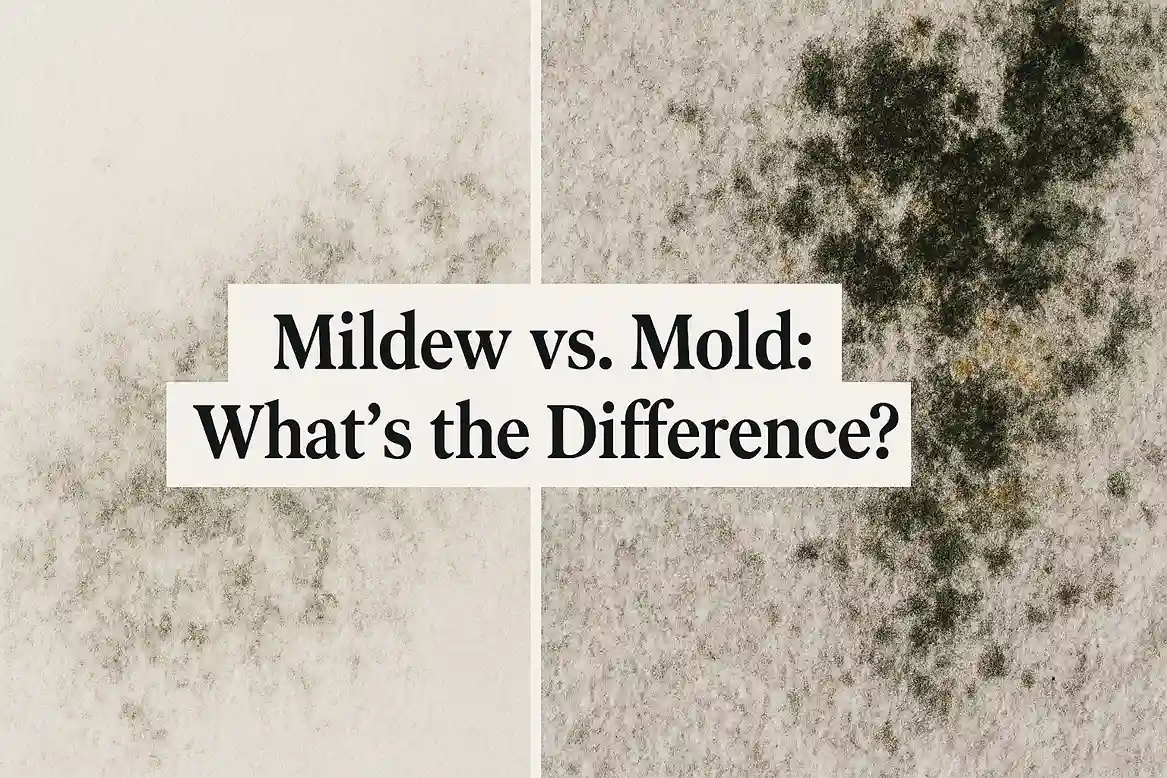
Noticing dark spots on your walls, ceilings, or bathroom tiles can be alarming. You might wonder: is it mildew vs mold? Many homeowners struggle to tell the difference, yet knowing which fungus you’re dealing with is essential to keeping your home safe. Mildew vs mold may look similar at first glance, but they behave differently, pose varying health risks, and require distinct approaches to removal.
Simply put, mildew is a specific type of fungus that usually grows on flat surfaces and appears powdery or white, while mold is a broader category of fungi that can penetrate walls, fabrics, and other porous materials. Understanding these differences can help you act quickly to prevent damage and protect your family’s health.
In this article, we’ll explore the differences between mildew and mold, how to identify each, the risks they pose, and effective strategies for removal and prevention. You’ll also learn how to spot black mold, understand when professional intervention is necessary, and take steps to maintain a fungus-free environment.
What is Mildew vs Mold?
Mildew and mold are both types of fungi, but they vary in appearance, growth habits, and severity.
Pro tip: Keep your home safe from mold with GCR Builders LLC trusted experts in home remediation and fungus prevention.
- Mildew: Appears white, gray, or yellow; powdery texture; grows on flat, damp surfaces like tiles, paper, or windowsills.
- Mold: Can be black, green, brown, or even blue; fuzzy or slimy; penetrates porous surfaces such as drywall, wood, and fabrics.
Expert insight: Mildew often appears first and is easier to remove. Ignoring it can allow mold to develop, which is harder to eradicate and can cause structural and health problems.
How to Identify Mildew and Mold
What Does Mildew Look Like?
- Light-colored: white, gray, or yellow.
- Flat and powdery in texture.
- Typically grows in damp areas like bathrooms and kitchens.
- Mild musty odor.
What Does Mold Look Like?
- Colors include black, green, brown, or reddish.
- Fuzzy or slimy texture.
- Can grow on walls, ceilings, carpets, or furniture.
- Strong, musty odor.
Professional tip: Shine a flashlight into dark corners or behind furniture. Early mold detection is easier when using a white cloth to spot spores.
Health Risks: Is Mildew or Mold Harmful?
Both mildew and mold can affect health, but mold is generally more serious.
- Mildew: May trigger mild eye or skin irritation and occasional respiratory discomfort.
- Mold: Can cause allergic reactions, asthma attacks, and serious complications with prolonged exposure especially toxic black mold.
Safety checklist:
- Keep humidity levels below 50%.
- Fix leaks immediately.
- Ventilate bathrooms and kitchens.
- Clean mildew promptly to prevent mold growth.
Mildew vs Black Mold
Black mold, or Stachybotrys chartarum, is known for its toxicity and potential health hazards.
| Feature | Mildew | Black Mold |
| Color | White, gray, yellow | Dark green to black |
| Texture | Powdery | Fuzzy or slimy |
| Growth | Flat surfaces | Penetrates walls, ceilings, and wood |
| Health Risk | Mild irritation | Severe respiratory and chronic health issues |
| Detection | Usually visible early | Often hidden, stronger odor |
Detection steps:
- Inspect corners, ceilings, and behind walls.
- Smell for strong musty odors.
- If suspected, hire professionals to test for toxic mold.
How to Remove Mildew and Mold
Mildew Removal
- Wear gloves and a mask.
- Mix equal parts water and vinegar or mild bleach solution.
- Scrub the affected area with a sponge.
- Dry thoroughly to prevent recurrence.
Mold Removal
- Identify all affected areas.
- Use specialized cleaners or hire professionals.
- Remove porous materials if contaminated.
- Control humidity and improve ventilation.
Pro tip: Avoid mixing bleach with ammonia, it produces toxic fumes. Early action prevents higher repair costs and health risks.
Prevention Tips
- Maintain low humidity with dehumidifiers or air conditioners.
- Repair leaks promptly.
- Clean bathrooms and kitchens regularly.
- Use mold-resistant paints and materials.
- Ensure proper attic and basement ventilation.
Real example: A homeowner noticed mildew forming in a shower corner. Cleaning immediately prevented black mold growth, saving time and thousands in repair costs.
FAQ: Mildew vs Mold
Q1: What is mildew?
A: Mildew is a type of fungus growing mainly on flat, damp surfaces, often white, gray, or yellow.
Q2: Is mildew dangerous?
A: Mildew may cause mild irritation but is generally less harmful than mold.
Q3: How to identify black mold?
A: Black mold is dark green to black, fuzzy, and usually found in hidden damp areas with a strong musty smell.
Q4: Difference between mold and mildew?
A: Mildew grows on surfaces and is powdery; mold can penetrate materials, is often darker, and more harmful.
Q5: Is mold a fungus?
A: Yes, mold is a type of fungus that thrives in moist, organic environments.
Q6: How to prevent mildew and mold?
A: Control moisture, fix leaks, ventilate properly, and clean damp areas regularly.
Conclusion
Understanding mildew vs mold is essential for a safe, healthy home. Mildew is easier to manage, but mold, especially black mold, requires careful attention and sometimes professional help. Consistent cleaning, moisture control, and early detection are key to keeping fungi at bay. For serious mold problems, trust professionals like GCR Builders LLC to provide safe, effective remediation.
Key takeaway: Early action and prevention are the best ways to protect your home and health from both mildew and mold.